Skip to content

The AgileBrain 10 States

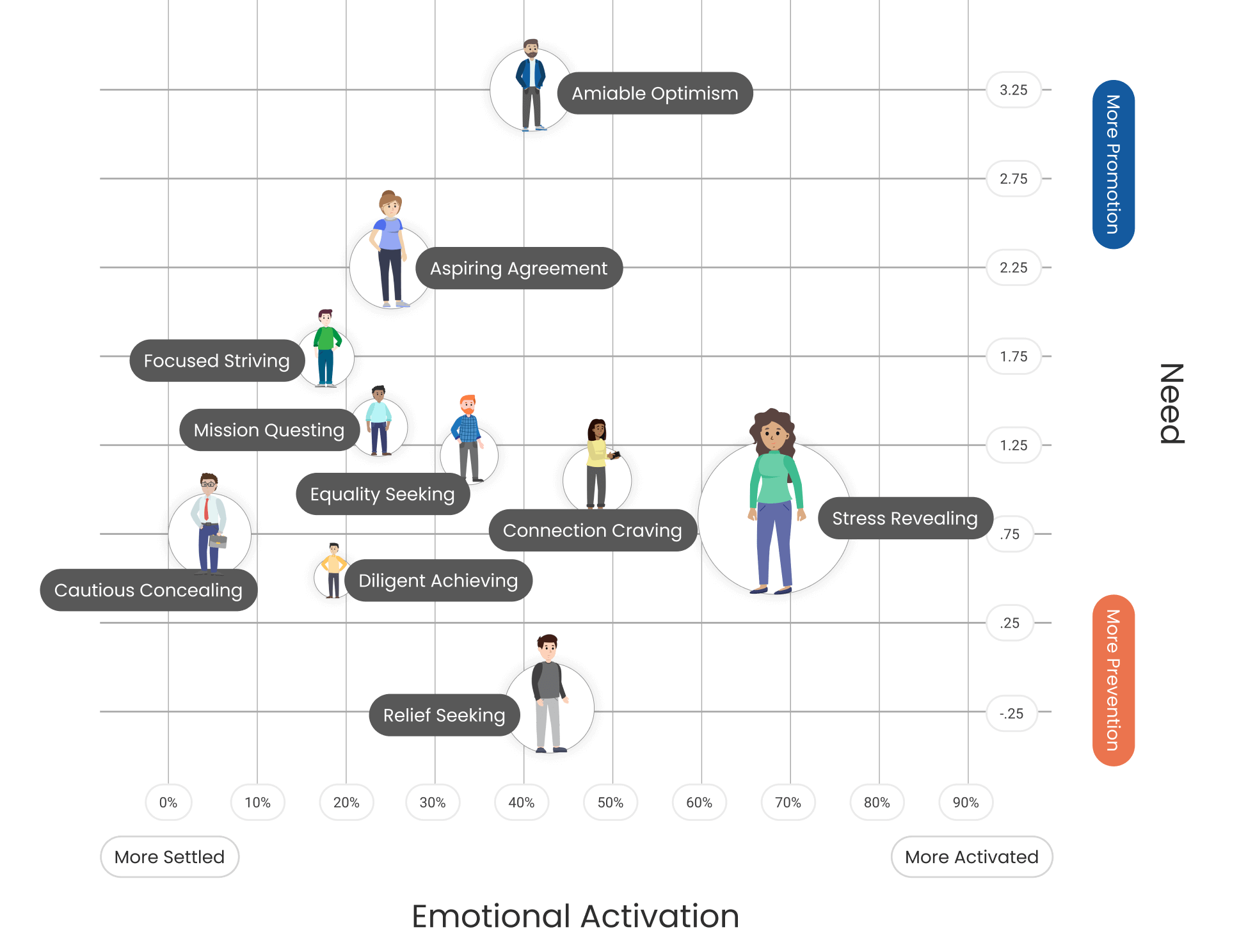
Each individual’s AgileBrain profile is unique, reflecting their specific emotional state at the time and for the specific focusing prompt. Indeed, if you do the math, there are over 620 septilian possible patterns (more than the total gallons of water on the Earth!). AgileBrain 10 States uses cluster analysis to reduce that effectively infinite profiles into ten distinct patterns of emotions. The chart below at left shows those 10 states arrayed by activation (x-axis) and positivity or valence (y-axis).

The chart below shows those same 10 states with the pattern of activation and positivity within the AgileBrain Framework associated with each. In each case, the size of the bubble represents the relative size of the population in that state. So, for example, Stress Revealing is one of the largest bubbles (about 19% of the population) and located to the right, indicating high Activation. It is relatively low in the chart, indicating one of the lowest Positivity scores. Finally, stress revealers are particularly activated in the Self Domain (left-most column in the Framework) and the Spiritual Domain (right most column), and keeping with their negativity, 5 of the 7 total activated need cells are negative (orange in this illustration).

At Leading Indicator Systems, we regularly run large-scale validation studies for AgileBrain. Each time we ask respondents additional questions on a wide range of social-emotional topics. Since we know the AgileBrain 10 State for these study respondents, we can run statistical analyses that “load” those social-emotional data onto the AgileBrain 10 States that best fit. The AgileBrain 10 State Profile for Stress Revealing illustrates how we gather additional insight about individuals to assist them and their coaches and counselors as well as to drive insight at the organizational level to inform administrators about deeper issues that may be affecting the wellbeing of their population.

Important to Note
  • AgileBrain 10 State Profiles are approximations. Just because someone is assigned a 10 State Profile does not mean that all social-emotional characteristics are present.
  • We do not recommend sharing the 10 State profile with individuals. Labeling does little good and can do harm. They are meant as additional information for consideration by professionals.
  • More: Inclusion, Potential
  • Less: Self and Spiritual motives
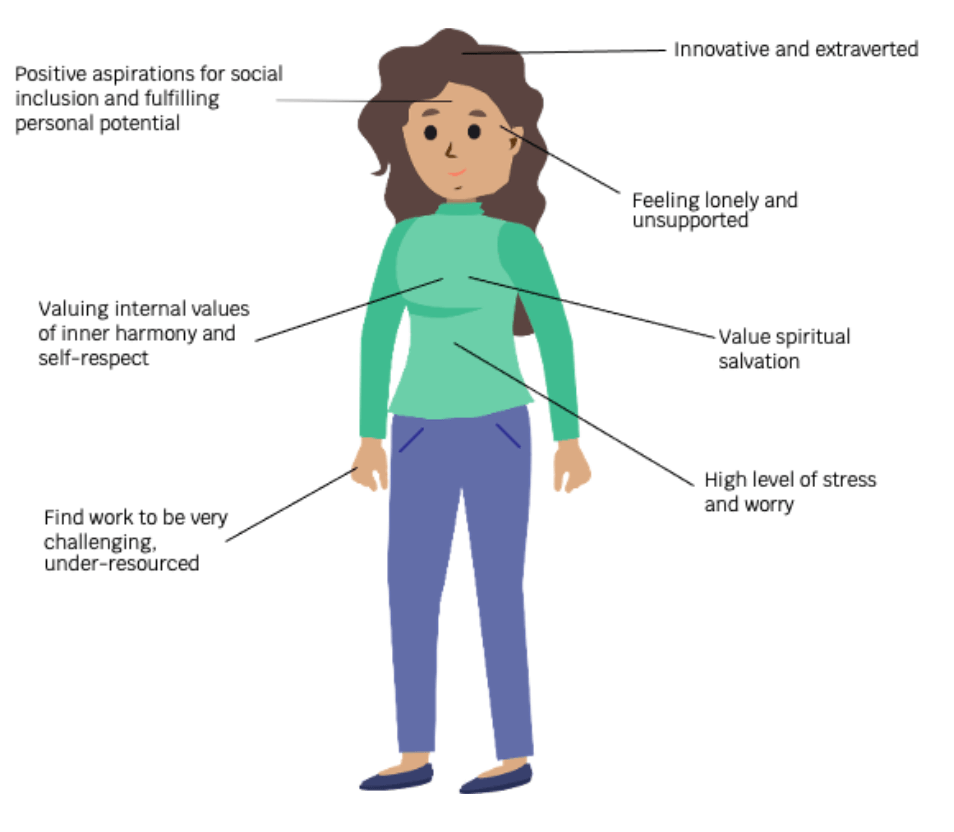
  • Positive aspirations for social inclusion and fulfilling personal potential
  • Innovative and extraverted
  • Valuing internal values of inner harmony and self-respect
  • Find work to be very challenging, under-resourced
  • Feeling lonely and unsupported
  • Value spiritual salvation
  • High level of stress and worry
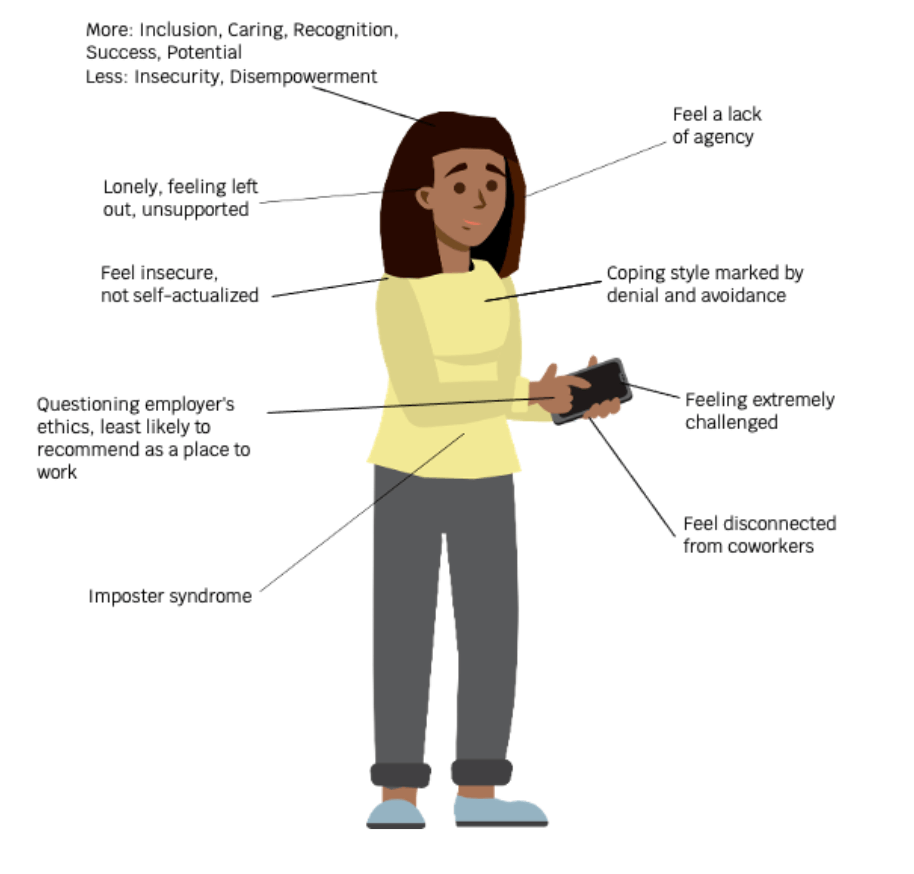
  • More: Inclusion, Caring, Recognition, Success, Potential
  • Less: Insecurity, Disempowerment
  • Lonely, feeling left out, unsupported
  • Feel insecure, not self-actualized
  • Questioning employer’s ethics, least likely to recommend as a place to work
  • Feel a lack of agency
  • Coping style marked by denial and avoidance
  • Feeling extremely challenged
  • Feel disconnected from coworkers
  • Imposter syndrome
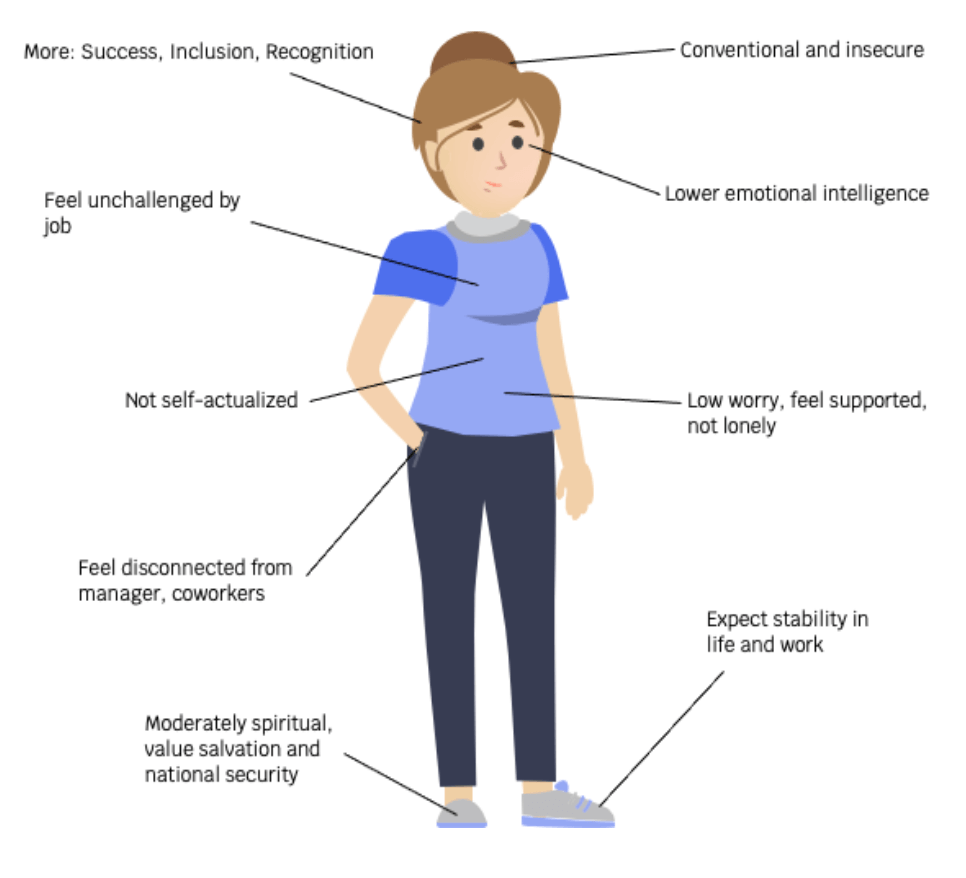
  • More: Success, Inclusion, Recognition
  • Conventional and insecure
  • Feel unchallenged by job
  • Lower emotional intelligence
  • Not self-actualized
  • Low worry, feel supported, not lonely
  • Feel disconnected from manager, coworkers
  • Moderately spiritual, value salvation and national security
  • Expect stability in life and work
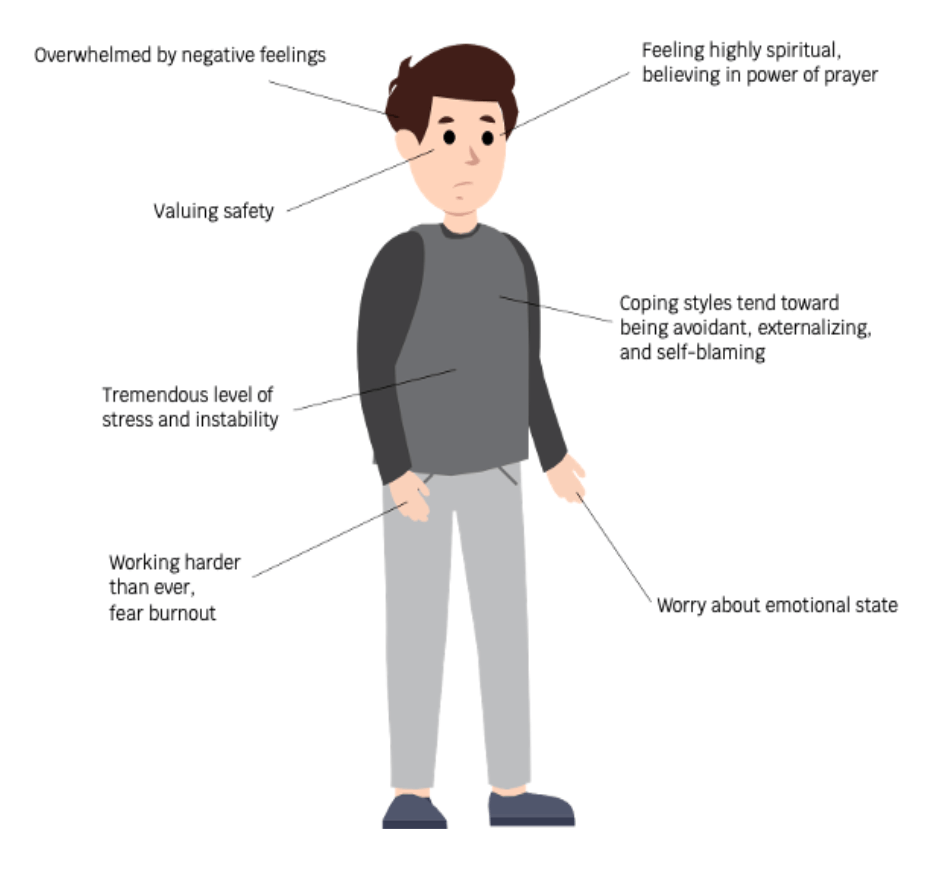
  • Overwhelmed by negative feelings
  • Feeling highly spiritual, believing in power of prayer
  • Valuing safety
  • Coping styles tend toward being avoidant, externalizing, and self-blaming
  • Tremendous level of stress and instability
  • Working harder than ever, fear burnout
  • Worry about emotional state
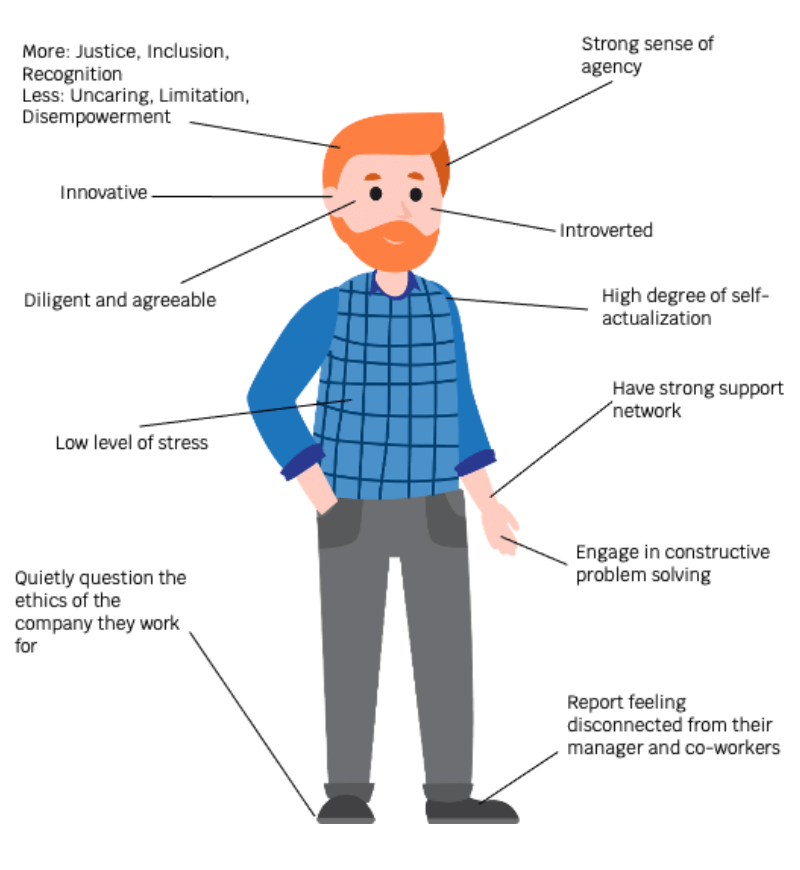
  • More: Justice, Inclusion, Recognition
  • Less: Uncaring, Limitation, Disempowerment
  • Innovative
  • Diligent and agreeable
  • Strong sense of agency
  • Introverted
  • High degree of self- actualization
  • Have strong support network
  • Low level of stress
  • Quietly question the ethics of the company they work for
  • Engage in constructive problem solving
  • Report feeling disconnected from their manager and co-workers
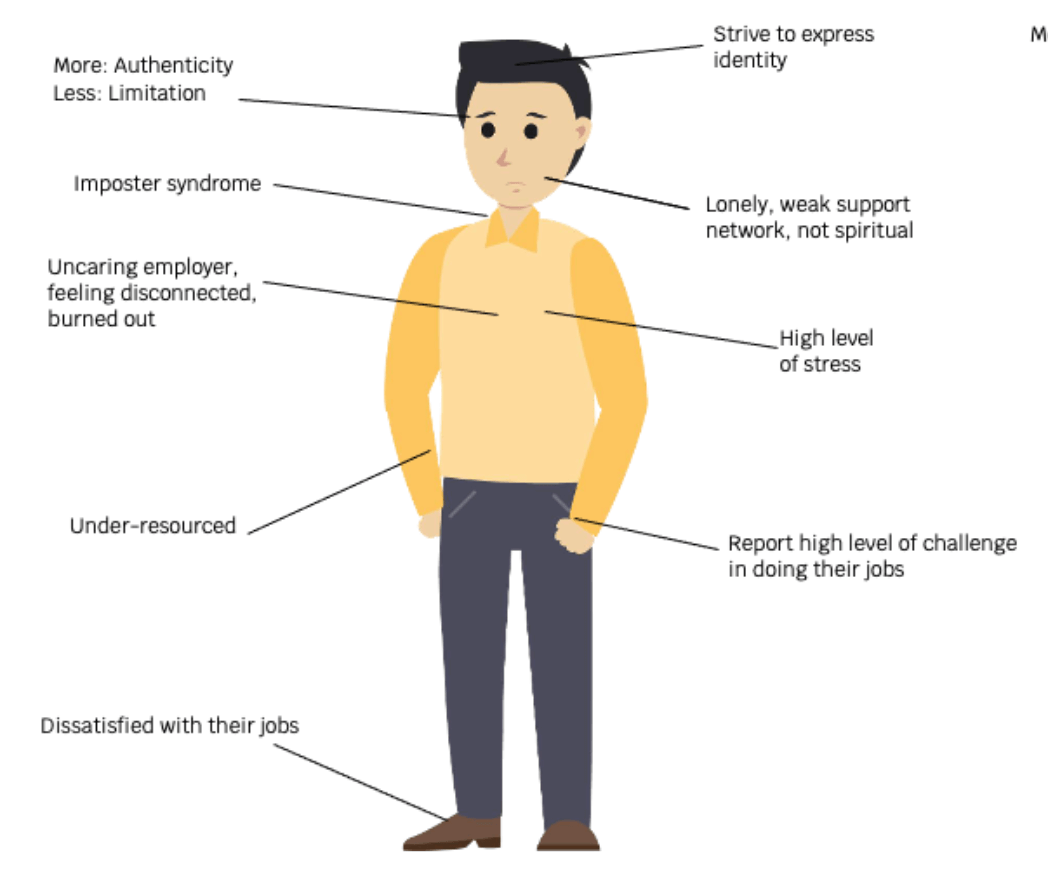
  • More: Authenticity Less: Limitation
  • Imposter syndrome
  • Uncaring employer, feeling disconnected, burned out
  • Strive to express identity
  • Lonely, weak support network, not spiritual
  • High level of stress
  • Under-resourced
  • Report high level of challenge in doing their jobs
  • Dissatisfied with their jobs
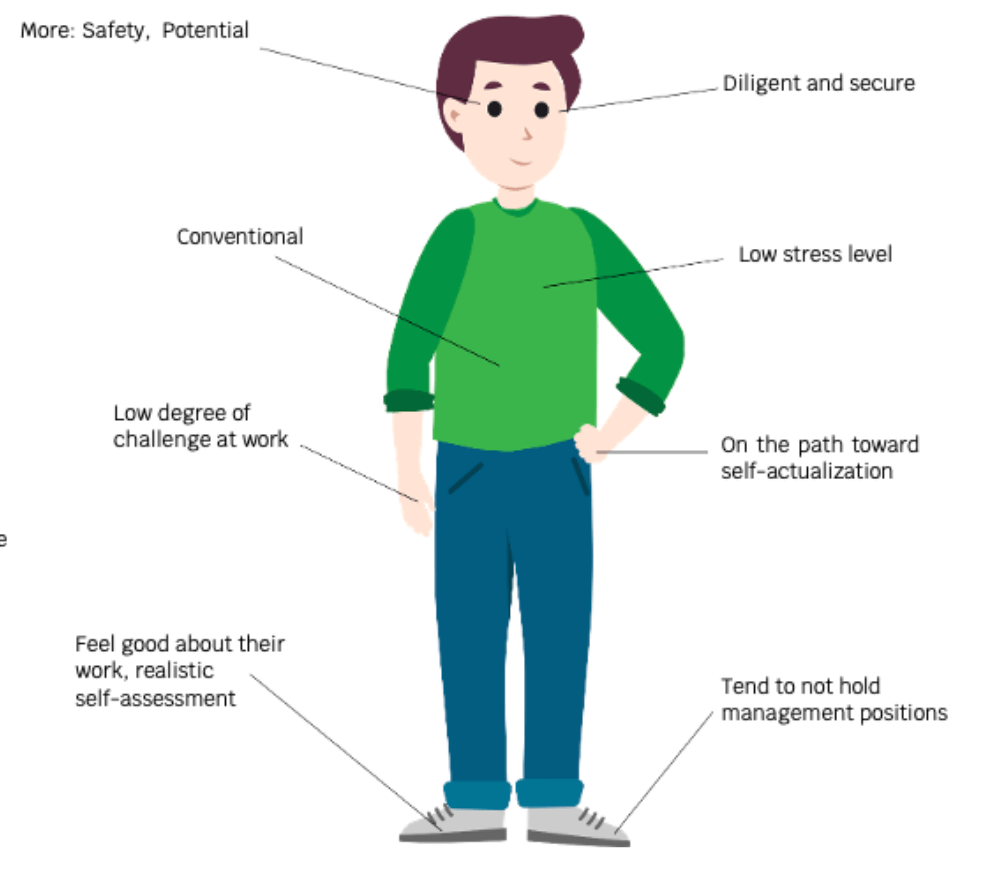
  • More: Safety, Potential
  • Diligent and secure
  • Conventional
  • Low stress level
  • Low degree of challenge at work
  • On the path toward self-actualization
  • Feel good about their work, realistic self-assessment
  • Tend to not hold management positions
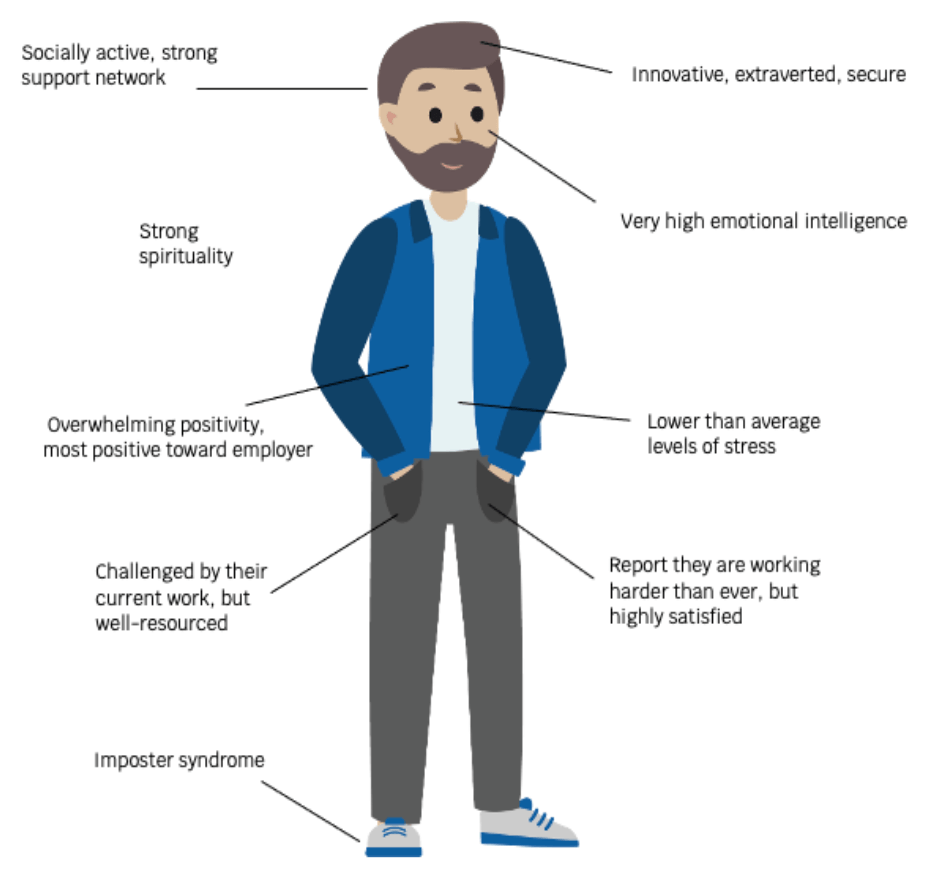
  • Socially active, strong support network
  • Innovative, extraverted, secure
  • Strong spirituality
  • Very high emotional intelligence
  • Overwhelming positivity, most positive toward employer
  • Challenged by their current work, but well-resourced
  • Lower than average levels of stress
  • Report they are working harder than ever, but highly satisfied
  • Imposter syndrome
  • More: Justice, Ethics, Purpose Less: Materialism
  • Values wisdom, plays the role of the sage
  • Extraverted, agreeable, diligent, secure
  • Already self-actualized
  • Moderately spiritual, power of prayer, larger purpose
  • Satisfied with work, feel that employer cares, feel connected
  • Supported at home but some unmet care needs
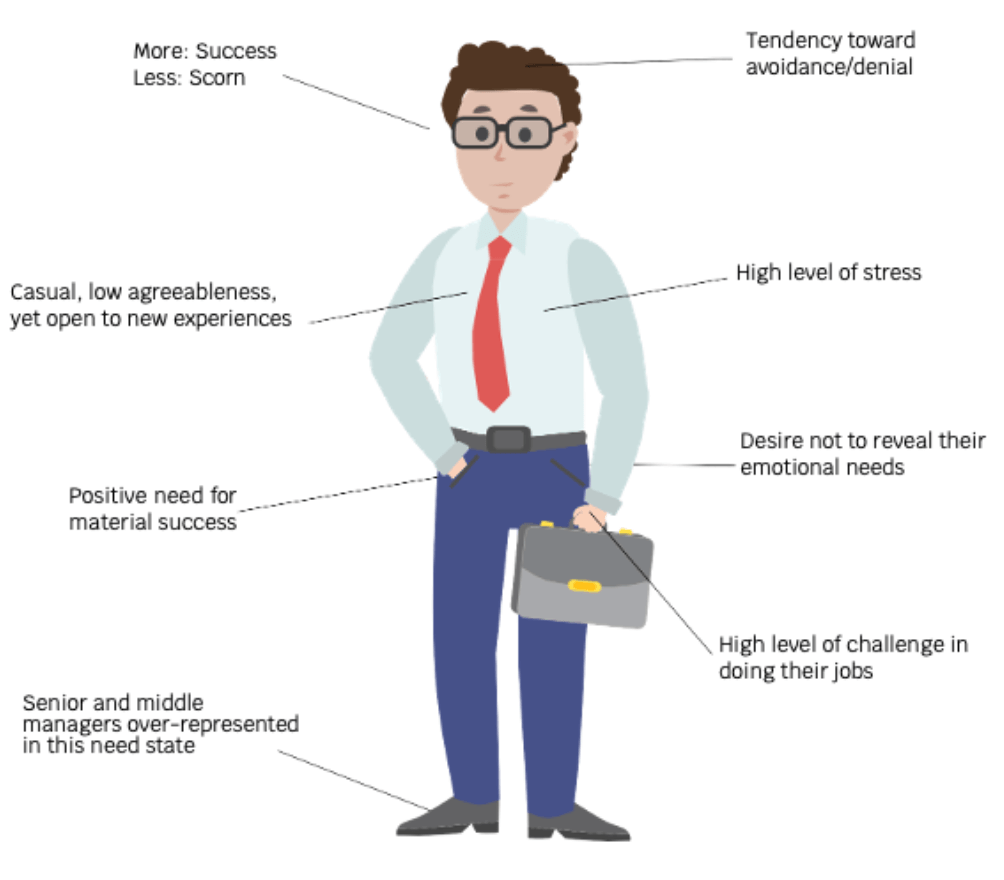
  • More: Success
  • Less: Scorn
  • Tendency toward avoidance/denial
  • Casual, low agreeableness, yet open to new experiences
  • High level of stress
  • Desire not to reveal their emotional needs
  • Positive need for material success
  • High level of challenge in doing their jobs
  • Senior and middle managers over-represented in this need state
Back To Top